Save $100 on $1,000 or More in Tree Services
Remove Dead, Hazardous, or Leaning Trees With Tree Removal Services in Covington, WA
Dead, damaged, leaning, or unwanted trees can put property and usable space at risk. We plan challenging removals around the tree, access, structures, landscaping, and conditions on your property.
Remove the Tree Without Overlooking the Property Around It
A tree may need to come down because it is dead, severely damaged, leaning toward a structure, crowding other trees, or interfering with plans for the property. Whatever the reason, removing it involves more than cutting at the base. The size and condition of the tree, available working space, nearby structures, fences, landscaping, and access all influence how the work should be approached. Our tree removal services begin by considering those conditions and defining the work before removal starts.
JMV Tree Service works with residential and commercial property owners who need single-tree removal or help addressing multiple unwanted trees. Our team brings 15 years of combined tree care experience to projects ranging from dead tree removal to large and challenging removals. When sectional removal is appropriate, branches, limbs, and trunk sections can be taken down in a planned sequence based on the tree and surrounding space.
We also discuss debris handling and the final condition of the work area as part of the project scope. If the stump needs to be addressed after the tree is down, our stump grinding service can be added to the project. There is no upfront deposit, and after the agreed work is completed, we conduct a final walkthrough with you before payment.
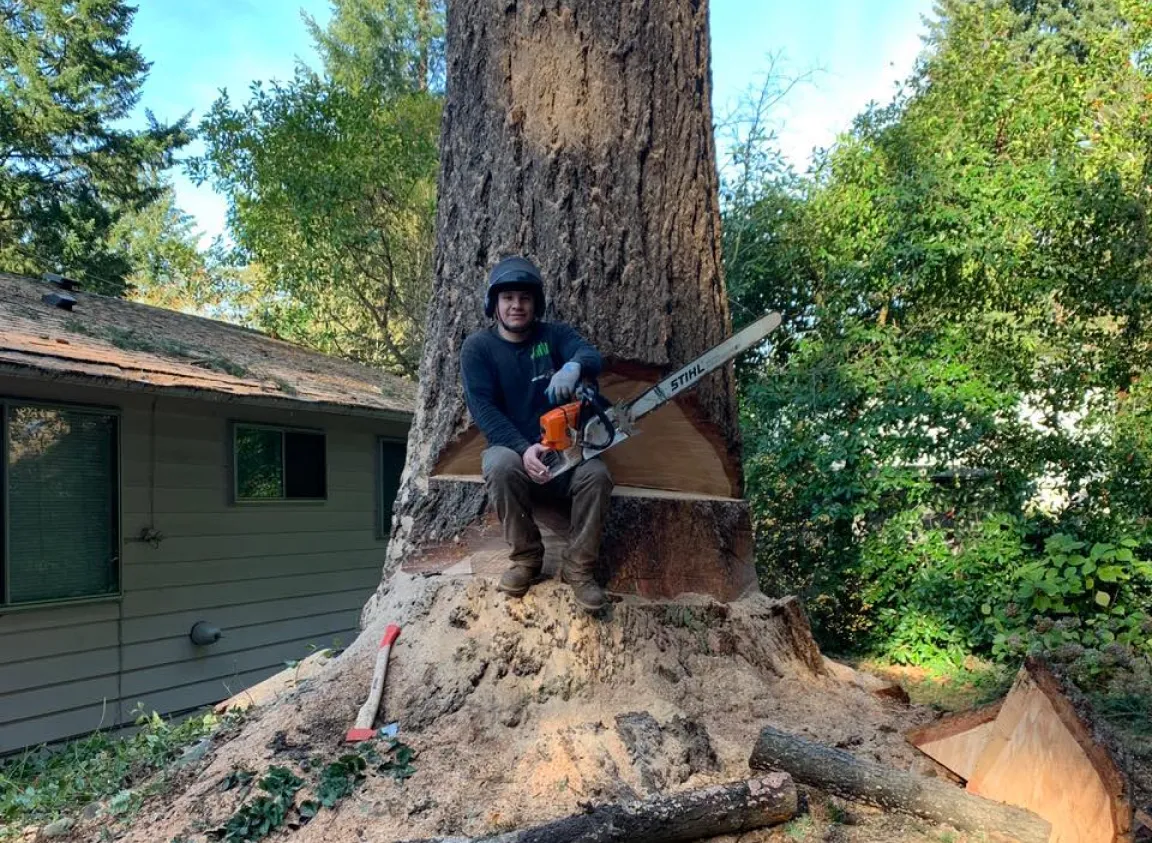
Know When Tree Removal Is the Right Next Step
Not every tree problem calls for removal. In some situations, trimming or pruning may be more appropriate. Removal becomes a consideration when a tree is dead, structurally compromised, severely storm-damaged, poorly positioned, or no longer compatible with how the property is being used. We look at the individual tree and its surroundings so the proposed work reflects actual site conditions.
As a tree removal company serving both homeowners and commercial property owners, we take on projects involving trees near houses, garages, fences, driveways, parking areas, landscaping, access routes, and other frequently used spaces. Large trees and restricted access can make the removal process more involved, which is why planning the work around the property matters.
Common reasons to discuss removal include:
- Dead or Declining Trees: A dead or significantly declining tree may no longer be appropriate to keep in place, particularly when it stands near a home, business, driveway, parking area, or another frequently used part of the property.
- Hazardous Tree Removal: Trees with significant structural concerns, broken trunks, major damaged limbs, or other visible problems may require removal when their condition creates concern for surrounding structures, property features, or commonly used areas.
- Leaning Tree Removal: A tree leaning toward a building, fence, driveway, outdoor area, or other important part of the property may need closer evaluation to determine whether removal is the appropriate course of action.
- Storm and Fallen Tree Removal: Wind and storms can break major limbs, damage trunks, or bring an entire tree down. Our removal work can address storm-damaged and fallen trees based on their position, accessibility, and surrounding conditions.
- Space and Property Improvements: An otherwise unwanted tree may interfere with planned improvements, overcrowd other trees, or occupy space you want to use differently. Selective removal can help prepare the area for the property’s next use.
From the First Look to the Final Walkthrough
Clear communication starts before the first cut. We review the tree’s size, location, visible condition, surrounding property features, and available access. Those details help determine how branches and trunk sections can be handled and whether the tree should be removed in sections rather than brought down as one piece. This site-specific approach is especially important when working around buildings, landscaping, fences, access routes, or limited working space.
Once the approach is defined, the removal can include branch and limb removal, trunk removal, cutting material into manageable sections, and handling debris according to the agreed scope. We discuss whether tree material will be hauled away, left on the property, or handled another agreed way before the work begins. Stump grinding is separate from tree removal and can be discussed when you want the remaining stump reduced after the tree comes down.
JMV Tree Service was established in 2020 and brings 15 years of combined tree care experience to residential and commercial work. We take on difficult tree removals with attention to the property around the work area, and we do not require an upfront deposit. After the agreed work is complete, we walk through the project with you before payment. Cash, check, and credit card are accepted.
If you are dealing with a dead, damaged, leaning, fallen, or unwanted tree, our tree removal services in Covington, WA give you a clear way to discuss the problem and determine the work needed. For urgent storm damage or fallen trees, our 24-hour emergency tree removal service is also available.
Frequently Asked Questions About Tree Removal
Tree removal can raise questions about when a tree should come down, what happens to the stump, how surrounding property affects the work, and what to expect afterward. These answers explain how JMV approaches common tree removal situations.
-
Removal may be appropriate when a tree is dead, severely damaged, structurally compromised, leaning toward a frequently used area, growing too close to a structure, or interfering with planned property improvements. Not every problem requires removal, however. The tree’s condition, location, surroundings, and your goals should all be considered when determining the appropriate next step.
-
Yes. JMV Tree Service handles challenging tree removals, including large trees and trees with hazardous conditions. The removal approach depends on factors such as tree size, visible condition, surrounding structures, available working space, fences, landscaping, and property access. Some trees may need to be removed in sections rather than brought down in one piece.
-
Tree removal does not automatically include stump grinding. Once the tree is removed, the stump remains unless grinding is included in the agreed project scope. If you want the remaining stump reduced, ask about adding our stump grinding service so both parts of the project can be discussed together before work begins.
-
Yes. We provide tree removal for both residential and commercial properties. Commercial projects may involve trees near buildings, parking areas, access routes, landscaped areas, or other commonly used spaces. We review the tree and site conditions to define the proposed work based on the property’s needs and the challenges surrounding the tree.
-
Debris handling depends on the agreed scope of the project. Branches, logs, and other tree material may be hauled away, left on-site, or handled according to what was discussed before work begins. Once the agreed work is finished, we conduct a final walkthrough with you before payment so you can review the completed project.
Save on Your Tree Removal Project
Save $100 on $1,000 or more in tree services. Have a problem tree on your property? Talk with our team about the work it may need.